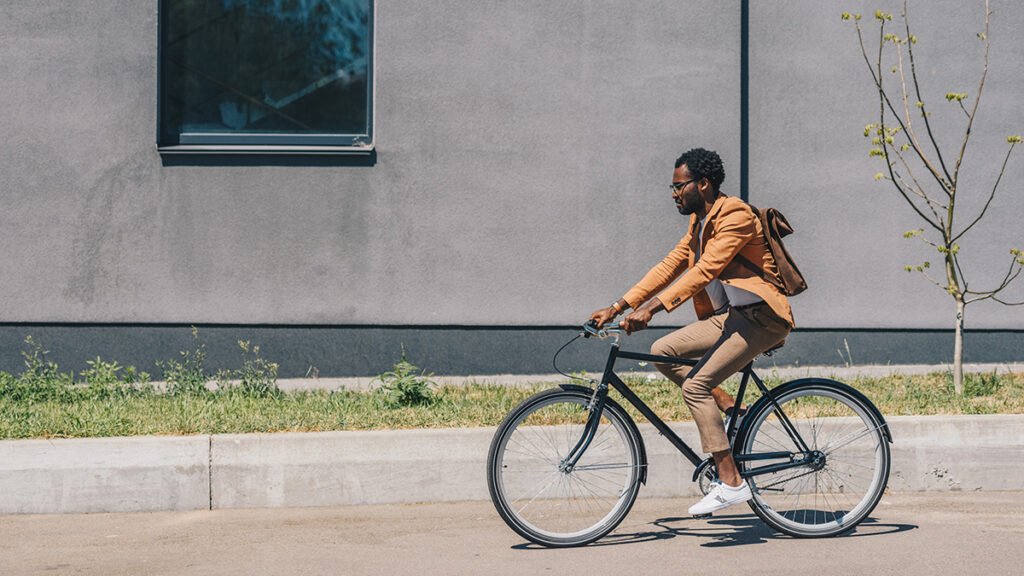
There’s a phrase I’ve heard countless times on the streets of Detroit and in communities across Michigan: “You don’t have a car?”
The question itself seems innocent enough. But listen closely to the tone. Watch the raised eyebrow. Notice the slight step backward. What you’re witnessing is mobility shaming, a pervasive, insidious form of social judgment that undermines the dignity
of millions of Americans who travel by foot, bicycle, wheelchair, public transit, or any means other than a private automobile.
Today, I want to name this behavior for what it is, explain why it matters, and challenge all of us to do better. I’ve discussed my own experiences with mobility shaming in The League of American Bicyclists magazine, and I know countless others share similar stories.
What Is Mobility Shaming?
Mobility shaming occurs when individuals are stigmatized, pitied, or judged negatively based on their mode of transportation. It manifests in subtle and overt ways:
- Coworker who assumes you’re “down on your luck” because you bike to work
- Family member who offers unsolicited car-buying advice every holiday
- Neighbor who questions whether you can “really” get groceries without a vehicle
- Employer who doubts your reliability because you depend on the bus
- Date who cancels after learning you don’t own a car
At its core, mobility shaming conflates car ownership with personal worth, professional capability, and social standing. It treats the automobile not merely as a means of transportation but as a prerequisite for full participation in American life.
This is both factually wrong and morally unacceptable.
The Numbers Tell a Different Story
In Detroit, approximately one-third of households lack access to a personal vehicle. Nationally, that figure represents millions of families. These are not failures of individual responsibility; they are reflections of economic reality, conscious choice, physical ability, environmental values, and geographic circumstance.
Consider:
Transportation costs consume nearly 30% of household income for many working families in metropolitan Detroit, far exceeding the national average. For some, choosing not to own a car isn’t giving up; it’s getting ahead. It’s redirecting thousands of dollars annually toward housing, education, healthcare, and building generational wealth.
Others among us cannot drive due to age, disability, vision impairment, or medical conditions. Are we to suggest that a teenager, an elder, a person with epilepsy, or a veteran recovering from traumatic brain injury is somehow lesser because they don’t hold car keys?
And still others like myself choose human-powered transportation because we understand its profound benefits: physical health, mental clarity, environmental stewardship, and genuine connection with our neighborhoods and neighbors.
The Legacy of Major Taylor
At Major Taylor Michigan Cycling Advocacy, we draw constant inspiration from Marshall “Major” Taylor the first Black world champion cyclist, a man who faced barriers far more severe than social judgment, yet persevered with dignity and excellence.
Major Taylor was told he didn’t belong on the bicycle. He was told the velodrome was not his space. He was physically attacked, verbally abused, and systematically excluded. Yet he rode anyway. He won anyway. He made history anyway.
Today, when someone is made to feel ashamed for riding a bicycle to work, when a mother is judged for walking her children to school, when a senior citizen is patronized for taking the bus we witness echoes of the same exclusionary thinking that Major Taylor confronted over a century ago.
The mode of transportation may differ, but the message is identical: “You don’t belong. You are less than. Your way of moving through the world is inferior.” We reject that message entirely.
The Real Costs of Mobility Shaming
Beyond its moral failure, mobility shaming produces tangible harm:
Economic Harm: Workers who could thrive in positions accessible by transit or bicycle may decline opportunities or relocate unnecessarily, believing they “need” a car to be taken seriously professionally.
Health Harm: Individuals who would benefit from active transportation may drive instead, trading 150 minutes of recommended weekly physical activity for sedentary commutes that contribute to obesity, heart disease, and mental health challenges.
Environmental Harm: The social pressure to drive even for trips under one mile contributes to emissions, congestion, and infrastructure strain that affect every resident regardless of transportation choice.
Community Harm: When we shame people off sidewalks, out of bike lanes, and away from bus stops, we undermine the very diversity of street life that makes neighborhoods vibrant, safe, and economically dynamic.
A Call to Reframe the Conversation
I am not asking you to sell your car. I am not suggesting that automobiles have no place in American mobility. For many, in many circumstances, driving is practical, necessary, and appropriate.
What I am asking is this: Examine your assumptions.
When you see a colleague arrive by bicycle, consider that they may have made a deliberate, intelligent choice rather than suffered a misfortune.
When you learn that a neighbor takes the bus, recognize that they are contributing to reduced congestion, cleaner air, and a more sustainable city, not demonstrating failure.
When you encounter someone using a wheelchair, walking with assistance, or traveling by means unfamiliar to you, extend the same respect you would offer anyone navigating their day with intention and purpose.
Transportation choice is not a hierarchy. It is a spectrum of options that should be celebrated, supported, and expanded, not ranked and judged.
What MTMCA Is Doing About It
Every program we operate at Major Taylor Michigan Cycling Advocacy confronts mobility shaming directly:
Youth Earn A Bike teaches young Detroiters that bicycles are vehicles of freedom and empowerment, not consolation prizes for those who can’t yet drive.
Stride and Glide introduces balance bikes in elementary classrooms, building physical literacy and confidence before societal messages about “real” transportation can take root.
Detroit Bike Bus normalizes active transportation for school commutes, demonstrating that children can arrive safely, joyfully, and healthily without a car line.
And our successful campaign for Major Taylor Day, Michigan’s and the nation’s first gubernatorial proclamation honoring this cycling pioneer, declares loudly that those who move on two wheels have always mattered, have always contributed, and will always belong.
The Road Forward
Language matters. Attitudes matter. The small comments we make and the assumptions we hold shape the social environment in which transportation choices are made.
I challenge you today:
- Catch Yourself. Notice when you make assumptions about someone’s transportation choices and question those assumptions.
- Speak Up. When you witness mobility shaming, name it gently. A simple “Actually, biking to work is pretty impressive” can shift a conversation.
- Celebrate Diversity. Recognize that a healthy transportation ecosystem includes walkers, cyclists, transit riders, drivers, and everyone in between.
- Support Infrastructure. Advocate for protected bike lanes, accessible sidewalks, reliable transit, and policies that give everyone real options.
- Model Respect. Whether you drive, ride, walk, or roll, treat others’ choices with the same dignity you expect for your own.
Have you experienced mobility shaming? Please share your story with us at info@mtmca.org. Your voice matters.
